Health and wellness, all in one place
Our goal is to help people live healthier lives. To do that, they need to consider several areas, including exercise, diet, healthy habits, balance, and, of course, medical care when needed.

“The pursuit of health and well-being will be a global priority in 2022, and Brazil will be no different. This was shown by the Global Consumer Sentiment Survey, conducted by WW in partnership with Kantar. The study surveyed 14,506 people aged 18 to 69 across 15 countries. After the pandemic, many Brazilians wanted to return to or begin a healthier lifestyle to reduce the risk of health issues.”
The survey found that 91% of Brazilians are focused on maintaining their health and well-being, compared with 78% worldwide. The main reasons were:
65%
want to improve their physical health
63%
want to improve their mental and emotional health
56%
want to improve their self-esteem and confidence
44%
see health and well-being as a way to make everyday life easier
People who want to live healthier lives but do not have time to schedule appointments or exams, or do not have health insurance and must rely on public healthcare.
People across the country who want to maintain or start healthy habits but do not know where to begin or what information to look for.
“According to data from Brazil’s National Registry of Healthcare Facilities (CNES):
This means that approximately 15.7 million Brazilians in these areas rely exclusively on SUS, Brazil’s public healthcare system.”
People without health insurance rely on public healthcare, while those with insurance often spend hours trying to find a hospital or doctor who can see them.
They are willing to get back to their health and wellness goals.
Following the impact of COVID-19, 43% of respondents blamed the pandemic for not reaching their health and wellness goals, while 51% pointed to a lack of money.
Most people only remember to take care of their health when something is not going well.
Several factors contribute to this problem, including:
Packing a homemade meal takes more effort than simply stopping at a fast-food restaurant or ordering delivery at lunchtime.
There is a reason it is called a comfort zone: it feels comfortable. Even with strong willpower, motivation alone may not be enough to build a healthier lifestyle.
A modern lifestyle can make it difficult to find time to focus on nutrition and health.
This problem is directly connected to people’s everyday habits, both professional and personal, as well as the influence of those around them. These factors can have either a positive or negative impact on their lives.
Many people want to become healthier, but busy routines, work, and social and family responsibilities often push this goal aside.
As healthy habits fall by the wayside, more complex health problems can begin to appear.
This creates an opportunity to make it easier for people to start living healthier lives by reducing uncertainty and addressing the main obstacles that prevent them from maintaining healthy habits.
With this information in mind, we defined a set of business strategies to offer stronger solutions and help our customers improve their lifestyle habits.
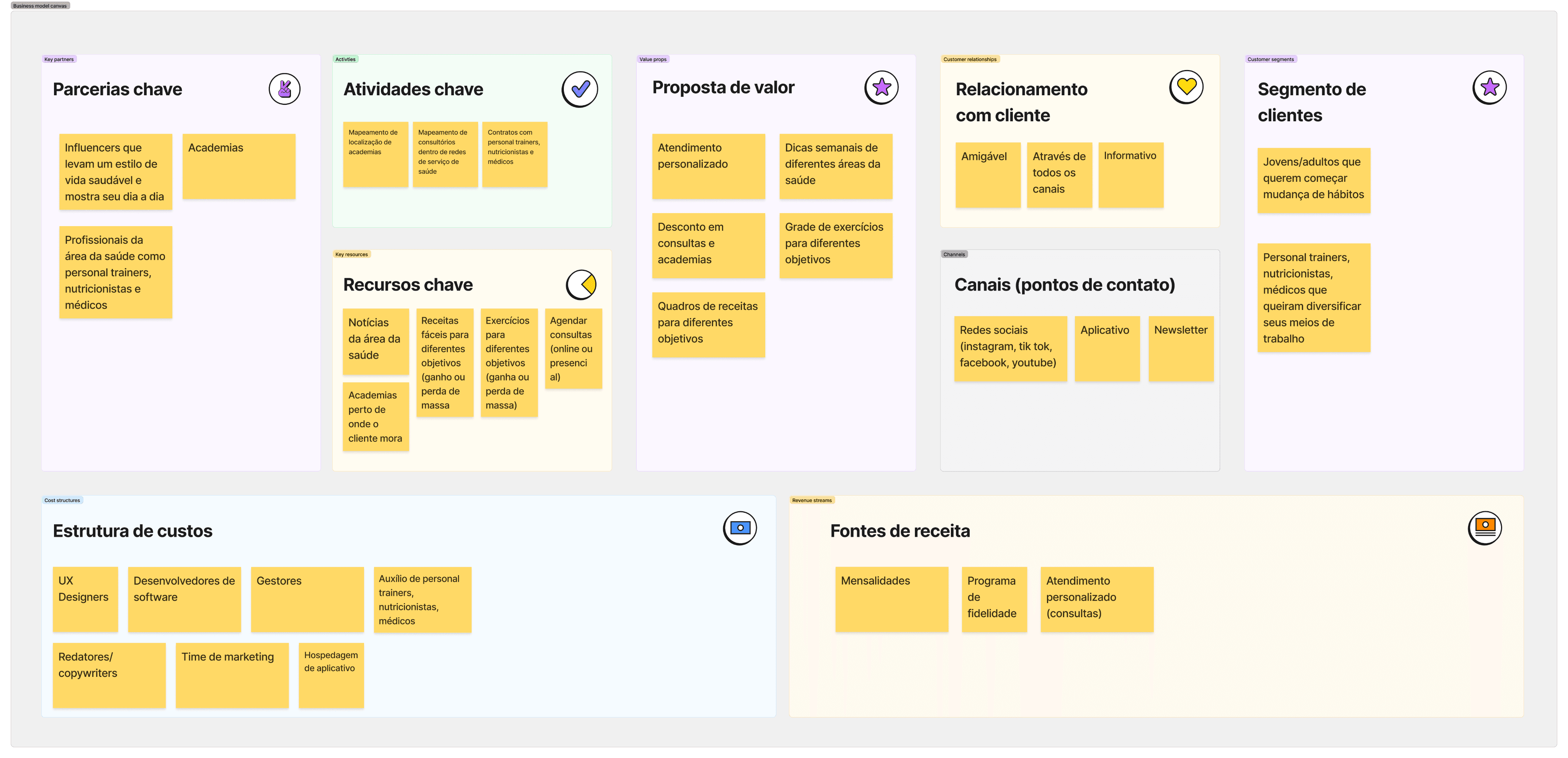
To focus on the challenges our customers face, we mapped their pain points and goals more clearly and explored how we could provide the right solution for each problem.
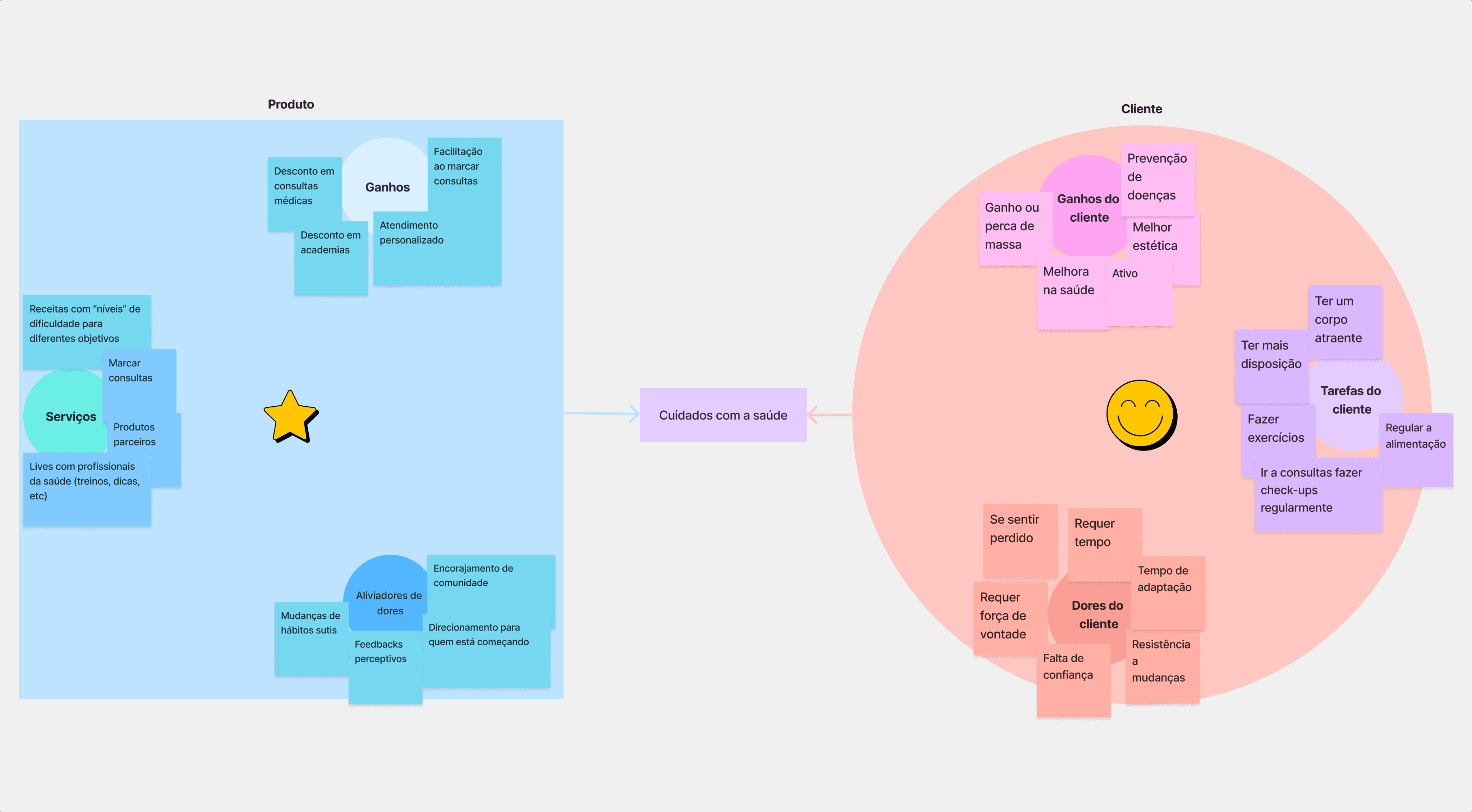
👀
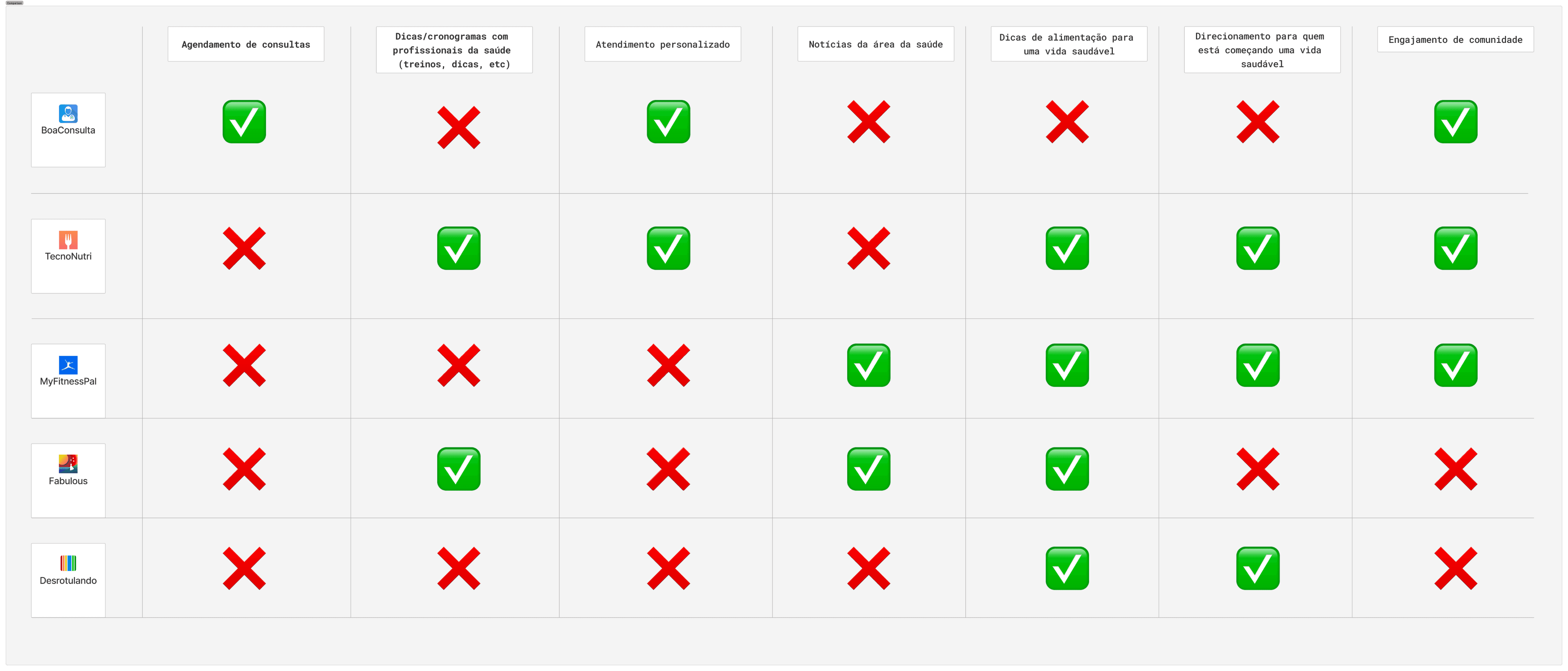
We analyzed several competitors to compare their strategies with ours, identify opportunities to improve the product, and create a more distinctive value proposition.
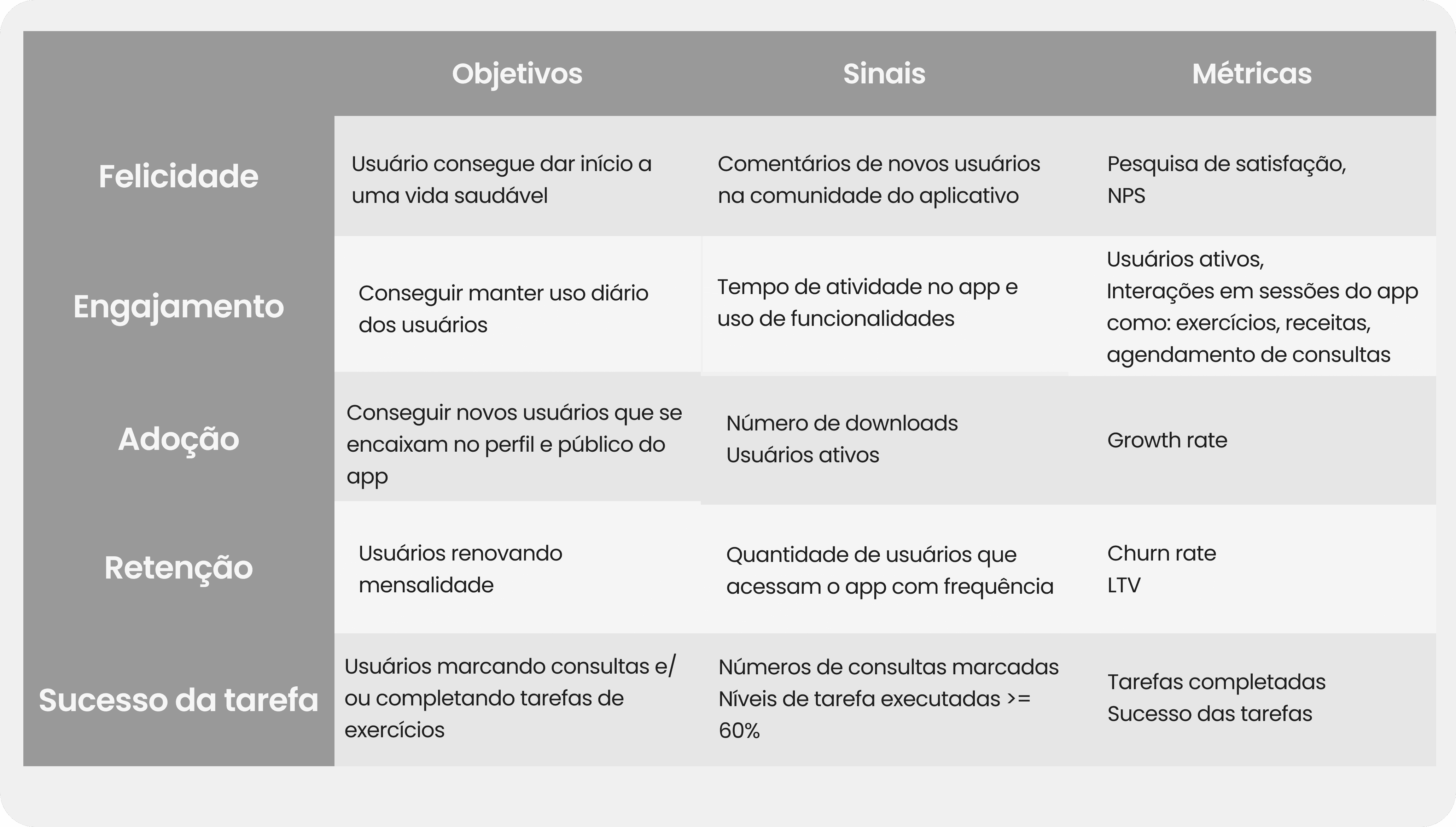
Based on this, we built a measurement framework around HEART to evaluate the product and understand whether we were meeting our goals.
This project aims to help people start taking care of their health by giving them access to medical appointments, exercise guidance, and diet plans for different goals. We defined the business strategy and moved into research to validate key questions and develop effective solutions for this challenge.
Next project


© Andressa Mendes 2026. All Rights Reserved